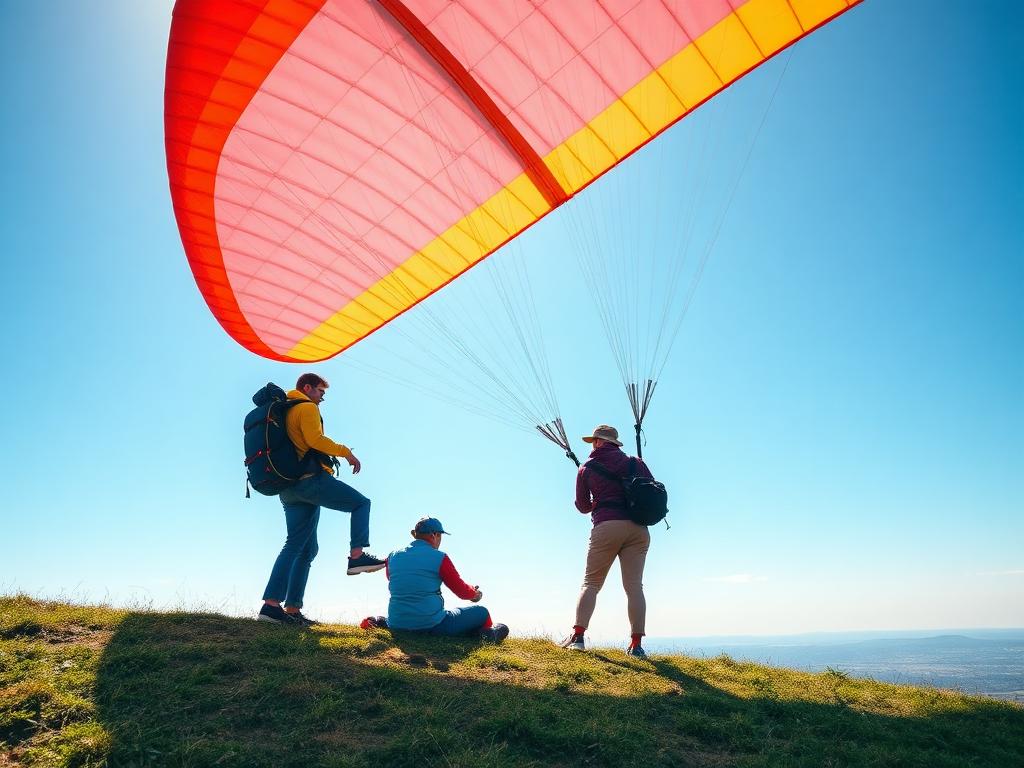
P1–P2 Foundation Course
Foundation Course — from first ground skills to independent take-off and landing
Extreme Flying Club Principle
Training is graduation-based, not day-based. The durations and flight numbers shown are average planning benchmarks, not limits. A student progresses when the required skills, understanding, judgement and flying ability have been demonstrated. Weather, continuity, individual learning pace and retained skills after any training gap can change the actual timeline.
Course Objective
P1–P2 builds the fundamental physical skills, theory, judgement and confidence required for a student to independently take off and land under appropriate morning and/or evening conditions.
Average Duration
15–20 days. No fixed maximum number of days or flights. If weather, skill development or retained knowledge requires additional training, the course continues.
Training Rhythm
A typical day can contain two training sessions of approximately 1.5–2 hours, generally one before lunch and one after lunch. Theory is conducted regularly and its timing depends partly on practical training and battery/equipment availability.
Flights
An average benchmark is approximately 12 flights per student within the 15–20 day progression. Some students may graduate in around 10 flights; others may require more. When conditions permit, the club may aim for around two flights on a day.
Ground Training Does Not End When Flying Starts
The first approximately seven days are generally ground-focused. After flying begins, instructors may bring a student back to ground training whenever a particular skill needs more development. Students showing additional interest may also be introduced, when instructor and equipment availability permit, to useful future-oriented skills such as ground handling, kiting and reserve packing.
Pilot-Friendly Schedule Map
| Days | What You Can Expect | What We Are Looking For |
|---|---|---|
| Days 1–2 | Ground handling, wing control, kiting and basic equipment familiarisation. | Control of the wing and understanding of basic ground behaviour. |
| Days 3–4 | Progressive kiting and ground exercises; theory integrated. | More consistent wing control and preparation for launch. |
| Days 5–7 | Ground-training consolidation and launch/landing preparation. | Readiness to begin flight training safely. |
| Days 8–10 | First supervised flights when conditions are suitable; continued theory and ground correction. | Basic flight control, launch sequence and landing approach. |
| Days 11–13 | Repeated flights; targeted ground work where needed. | More consistent take-offs, flight path control and landings. |
| Days 14–16 | Flying plus theory and specific skill refinement. | Reduced dependence on instructor input. |
| Days 17–20 | Consolidation flights and graduation preparation. | Independent take-off and landing under appropriate conditions. |
Days 1–2
What You Can Expect
Ground handling, wing control, kiting and basic equipment familiarisation.
What We Are Looking For
Control of the wing and understanding of basic ground behaviour.
Days 3–4
What You Can Expect
Progressive kiting and ground exercises; theory integrated.
What We Are Looking For
More consistent wing control and preparation for launch.
Days 5–7
What You Can Expect
Ground-training consolidation and launch/landing preparation.
What We Are Looking For
Readiness to begin flight training safely.
Days 8–10
What You Can Expect
First supervised flights when conditions are suitable; continued theory and ground correction.
What We Are Looking For
Basic flight control, launch sequence and landing approach.
Days 11–13
What You Can Expect
Repeated flights; targeted ground work where needed.
What We Are Looking For
More consistent take-offs, flight path control and landings.
Days 14–16
What You Can Expect
Flying plus theory and specific skill refinement.
What We Are Looking For
Reduced dependence on instructor input.
Days 17–20
What You Can Expect
Consolidation flights and graduation preparation.
What We Are Looking For
Independent take-off and landing under appropriate conditions.
This is a typical progression. Weather and individual progress may move activities earlier or later. Graduation is based on demonstrated ability.
Typical benchmark: about 12 flights across the P1–P2 progression, although some students graduate in around 10 flights and others require more. The course is not capped by this number.
Detailed Course Schedule
Course Details
Average 15–20 days (graduation-based)
Independent take-off and independent landing in appropriate morning and/or evening conditions.