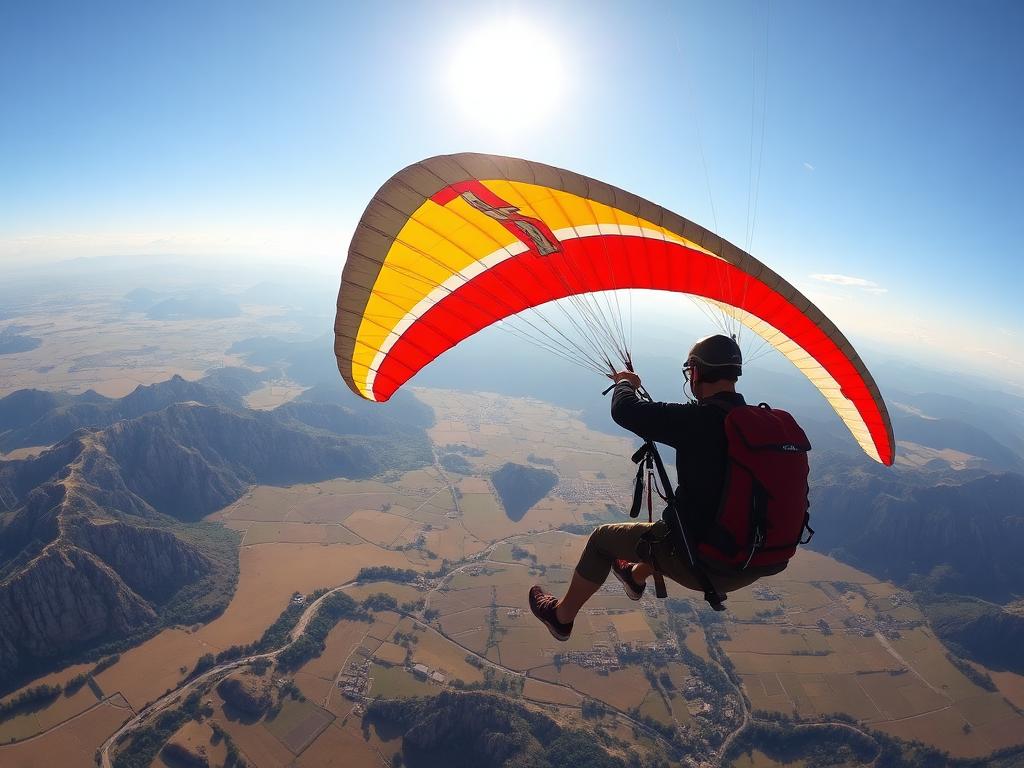
P3 — Thermic & Independent Flying
Thermic & Independent Flying — developing independent judgement in the air
Extreme Flying Club Principle
Training is graduation-based, not day-based. The durations and flight numbers shown are average planning benchmarks, not limits. A student progresses when the required skills, understanding, judgement and flying ability have been demonstrated. Weather, continuity, individual learning pace and retained skills after any training gap can change the actual timeline.
Course Objective
P3 develops the student from supervised flying toward independent thermic flying. The emphasis moves beyond aircraft control to meteorology, judgement, decision-making and the ability to sustain safe airtime in thermic conditions.
Average Duration
20–25 days, depending strongly on P1–P2 quality, continuity, weather and individual progress.
Graduation Benchmark
Independent meteorology study; independently deciding the time of flight; independent take-off; approximately one hour of airtime; and landing in thermic conditions, with the judgement required to manage the flight independently.
If the Student Has Had a Gap
The first few days may function as an advanced continuation of P2, including at least two days of ground handling followed by morning flights. The instructor then assesses retained muscle memory and knowledge before progressing toward thermic conditions.
Skill Progression
- Kiting manoeuvres
- Big ears
- Height-loss manoeuvres
- Navigation manoeuvres
- Theory
- Ridge soaring
- Thermalling
A continuing student may enter normal P3 thermic flying around day 5–6, while a student needing more rebuilding may take up to around 10 days.
Pilot-Friendly Schedule Map
| Days | What You Can Expect | What We Are Looking For |
|---|---|---|
| Days 1–2 | Advanced P2 refresh and ground handling if required, especially after a gap. | Re-established muscle memory and safe basic flying readiness. |
| Days 3–4 | Morning flights and controlled progression toward stronger conditions. | Ability to handle the aircraft confidently before thermic exposure. |
| Days 5–6 | For continuous students, normal P3 thermic flying may begin when conditions allow. | Early thermic understanding and controlled participation. |
| Days 7–10 | Kiting manoeuvres, big ears, height-loss, navigation, theory and ridge soaring. | Broader in-flight skill set and better awareness of the environment. |
| Days 11–15 | Thermic flying under command with progressively less instructor intervention. | Ability to judge, enter and remain safely in thermic lift. |
| Days 16–20 | Independent weather judgement and test-style flights. | Student begins owning flight decisions rather than following commands. |
| Days 21–25 | Consolidation, airtime building and graduation flights as required. | Independent thermic flying and progress toward the one-hour benchmark. |
Days 1–2
What You Can Expect
Advanced P2 refresh and ground handling if required, especially after a gap.
What We Are Looking For
Re-established muscle memory and safe basic flying readiness.
Days 3–4
What You Can Expect
Morning flights and controlled progression toward stronger conditions.
What We Are Looking For
Ability to handle the aircraft confidently before thermic exposure.
Days 5–6
What You Can Expect
For continuous students, normal P3 thermic flying may begin when conditions allow.
What We Are Looking For
Early thermic understanding and controlled participation.
Days 7–10
What You Can Expect
Kiting manoeuvres, big ears, height-loss, navigation, theory and ridge soaring.
What We Are Looking For
Broader in-flight skill set and better awareness of the environment.
Days 11–15
What You Can Expect
Thermic flying under command with progressively less instructor intervention.
What We Are Looking For
Ability to judge, enter and remain safely in thermic lift.
Days 16–20
What You Can Expect
Independent weather judgement and test-style flights.
What We Are Looking For
Student begins owning flight decisions rather than following commands.
Days 21–25
What You Can Expect
Consolidation, airtime building and graduation flights as required.
What We Are Looking For
Independent thermic flying and progress toward the one-hour benchmark.
This is a typical progression. Weather and individual progress may move activities earlier or later. Graduation is based on demonstrated ability.
Typical benchmark: approximately 15–20 flights to establish independent thermic flying. Some students will progress differently. Thermic flying may take longer than the typical range if weather or skill development requires it.
Detailed Course Schedule
Course Details
Average 20–25 days (graduation-based)
Independent meteorology and flight decisions; independent thermic flying; approximately one hour of airtime.